

We publish the highlights from an informational brochure by the European LPG Association (Liquid Gas Europe), dedicated to the possibilities for using renewable and recycled dimethyl ether (DME).
What is renewable and carbon recycled dimethyl ether (Renewable and Recycled Carbon DME)?
Dimethyl ether (DME), produced from renewable and recycled carbon, is a safe, clean fuel that can reduce harmful emissions in Europe from heating, transport, and industrial activities. DME is a gas and is typically transported and stored as a liquid under slight pressure, like propane-butane (LPG). Dimethyl ether can be produced from biogenic renewable raw materials and from mixed waste and recycled carbon raw materials, or from renewable energy and carbon dioxide (CO2). Its use will help reduce greenhouse gas emissions and improve air quality.
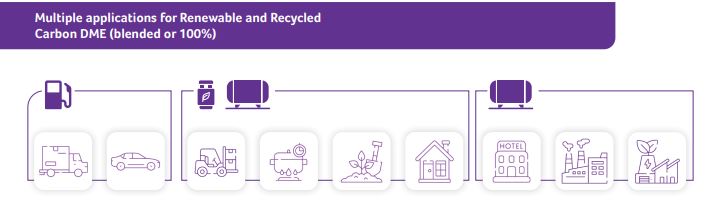
Use of DME
Renewable and recycled DME can be used directly in boilers, burners, or engines, or blended in certain quantities with other liquid gases, such as LPG, without requiring any changes to existing equipment.
For industrial purposes
Renewable and recycled carbon DME is an alternative method for defossilising industrial activities. Carbon or oil boilers can be replaced with boilers that use DME or DME with LPG.
For transportation
When mixed with LPG (up to 20%), DME can also be used for the gradual defossilization of existing LPG-powered vehicles.
For heating and cooking
Heating and cooking for domestic and industrial needs can be powered by a mixture of up to 20% renewable and recycled DME and LPG or renewable LPG (rLPG), without the need to replace appliances. This “ready-to-use” mixture uses existing infrastructure to save costs and ensure easy adaptation.
For transporting hydrogen
Transporting renewable and recycled DME requires minimal resources. Once transported to its destination, processing it into fuel is a relatively simple process.
Renewable and recycled DME can contribute to the decarbonization of the transportation, residential, and industrial sectors. The ability to add DME to the existing liquid gas supply chain or use it as a standalone fuel makes it an easily accessible solution for building a greener future.
You can find the full text of the brochure here.