

The increase in prices of fuel and high levels of pollution of the air are causing more and more a13> more drivers to use propane-butane as an a18> alternative fuel for their cars. The trend toward an increase in the number of LPG vehicles is particularly pronounced in Western Europe, but Bulgaria is also experiencing this trend.
Propane-butane fuel enters the engine in a gaseous state and easily mixes with air. The injection evenly fills the engine cylinders with a homogeneous fuel-air mixture that burns almost completely.
Here are a few facts about direct propane-butane injection:
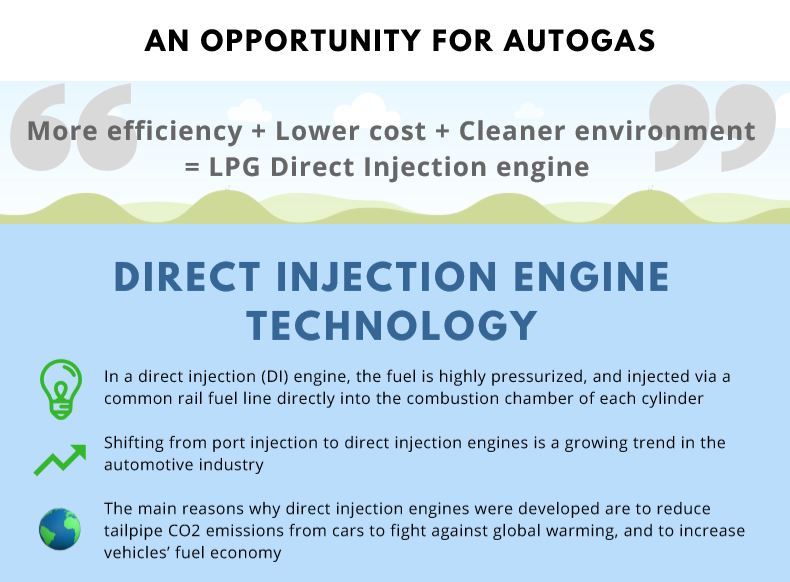
- In engines with direct injection, the fuel is under high pressure and is injected by means of an injector a rail directly into the fuel chamber of each cylinder.
- Direct injection of LPG allows more precise control of the amount of fuel and the timing of the cycle, during which it is injected into the cylinder. Thus, for maximum power, the entire amount of fuel can be injected into the intake manifold, while for maximum economy, it is possible to inject less fuel during the compression stroke.
- The transition to engines with direct injection is an increasing trend in the automotive industry.
- The main reasons for developing and distributing this type of engine are related to the idea of reducing harmful CO2 emissions from cars, reducing global warming, and increasing fuel economy.
- Propane-butane injection improves fuel efficiency by 10-20%.
According to statistics from the European LPG Association, over 8 million vehicles in the EU use propane-butane, and there are approximately 31,000 gas stations offering it in member states.
If you have not yet taken advantage of the benefits of direct propane-butane injection, now is the time to improve your car’s efficiency and drive economically and environmentally friendly.