

Shakespeare wrote that whatever we call a rose, it will continue to smell wonderful. Well, propane-butane may not have a smell, but it certainly has many names. Here are some of them.
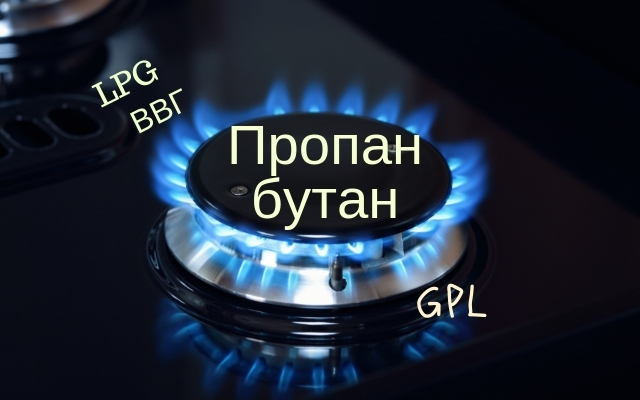
- LPG (Liquefied petroleum gas) in English language, LPG (Liquefied hydrocarbon gas) – in Bulgarian language
Abbreviations are used for convenience because the full names are difficult to repeat and pronounce. In France and Italy, LPG is known as GPL. The difference comes from the word order in the two countries, respectively “gaz de petrole liquefie” and “gas di petrolio liquefatto“.
- LPG gas
In colloquial language, the phrase LPG gas is often used, even though gas is present in the abbreviation LPG itself. Don’t be surprised if you come across the expression LPG Gas in English or simply LPG gas in Bulgarian – in both cases, it refers to propane-butane. 🙂
- Propane/Butane
In some countries, such as the US, only the name propane is commonly used for LPG, while in others, butane is used. Both propane and butane are hydrocarbon gases that fall under the broad label of LPG, as they are liquefied under pressure and are commonly used as fuel. You can learn more about the history of propane-butane here.
- Gas for barbecue
Due to its widespread use in various outdoor activities and for campers, propane-butane is often referred to as BBQ gas, camper gas, and derivatives.
- Autogas
When LPG is used as a motor fuel, it is popularly known as autogas. The natural products of LPG combustion are carbon dioxide and water vapor. Compared to light fuels, there are no emissions from heavy metal compounds. Autogas is also gentler on engines than traditional fuels. The combustion process does not release solid particles, which, due to their abrasive action, would cause engine wear.
We offer one of the most environmentally friendly automotive fuels on the Bulgarian market—a practical alternative to gasoline and diesel for both private and public transport. Find out more by calling: 0 700 20 204.